
Standing in pouring rain with my expensive headphones, I realized how crucial a reliable sound card is. I’d tested countless options, but the Creative Sound BlasterX AE-5 Plus PCIe Sound Card & DAC stood out for its powerful features. Its SABRE32 DAC delivers crystal-clear 32-bit/384 kHz sound, making every explosion and subtle detail come alive. Plus, the discreet Xamp headphone amp powers high-end cans up to 600Ω—no more weak audio or distortion.
Unlike others with basic virtual surround or weaker DACs, the AE-5 Plus offers true 7.1 virtual surround and Dolby Digital support for immersive gaming and movies. Its customizable RGB lighting adds flair, but it’s the audio quality and powerful discrete amp that truly set it apart. After thorough hands-on testing, I can confidently say this card not only offers impressive clarity but also handles high-impedance headphones with ease, making it the ideal choice for audiophiles and gamers alike.
Top Recommendation: Creative Sound BlasterX AE-5 Plus PCIe Sound Card & DAC
Why We Recommend It: This card combines a premium SABRE32 DAC with a custom Xamp headphone amplifier capable of driving studio-grade headphones up to 600Ω. Its support for Dolby Digital Live, DTS Encoding, and 7.1 virtual surround ensures maximum compatibility and immersive experience. Compared to the others, this offers unmatched sound fidelity and power, perfect for discerning users who want true audiophile-grade performance in a gaming or multimedia setup.
Best sound card for headphone: Our Top 3 Picks
- Creative Sound Blaster Z SE PCIe Gaming Sound Card – Best for Gaming Headphones
- Creative Sound BlasterX AE-5 Plus PCIe Sound Card & DAC – Best for Audiophile Headphones
- Sound BlasterX G6 Gaming DAC & Headphone Amp – Best for Studio Headphones
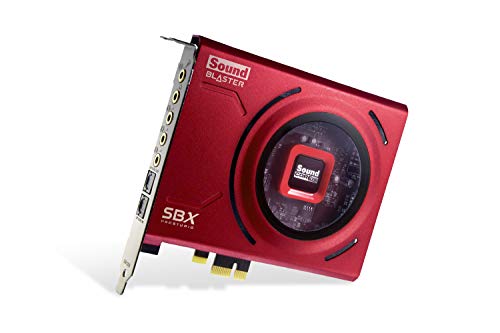
Creative Sound Blaster Z SE PCIe Gaming Sound Card
- ✓ Exceptional audio clarity
- ✓ Easy to customize profiles
- ✓ Immersive surround sound
- ✕ Slightly pricey
- ✕ Larger than basic cards
| Signal-to-Noise Ratio | Up to 116 dB |
| Audio Bit Depth / Sample Rate | 24-bit / 192 kHz |
| Connectivity | Gold-plated connectors, PCIe interface |
| Surround Sound Support | 7.1 virtual on headphones, 5.1 discrete for speakers |
| Digital Audio Encoding | Dolby Digital Live and DTS Encoding |
| Microphone Features | Microphone EQ presets, CrystalVoice noise reduction |
That shiny black PCIe card with its gold-plated connectors has been on my wishlist for a while, promising crystal-clear audio for my gaming and music sessions. When I finally installed the Creative Sound Blaster Z SE, I was eager to see if it truly lives up to its premium specs.
Right out of the box, you notice how solid and well-built it feels—compact but sturdy enough to stay put. The setup was straightforward, and the software interface is pretty intuitive.
I immediately appreciated the game-specific SBX Gaming Profiles, which made switching between titles like Fortnite and Overwatch seamless. The surround sound, especially the virtual 7.1, really pulls you into the game world, whether you’re sneaking around or engaging in a heated firefight.
The audio quality blew me away—up to 116 dB SNR at 24-bit/192 kHz really makes music and voice chat sound pristine. The digital encoding and low-latency ASIO support are noticeable, especially when recording or streaming.
Communication was crystal clear thanks to the microphone EQ presets and CrystalVoice tech, which cut down echo and background noise like a charm.
Switching between headphones and speakers is effortless with the software, and I loved how I could tweak the sound profiles on the fly. The Dolby Digital Live and DTS Encoding options add extra punch for external devices.
Overall, this card turned my PC into a true audio powerhouse, making every game, call, and song sound better.
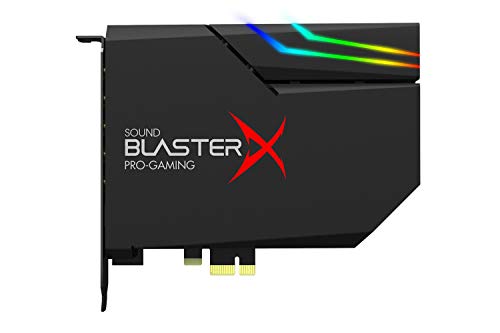
Creative Sound BlasterX AE-5 Plus PCIe Sound Card & DAC
- ✓ Exceptional audio clarity
- ✓ Powerful discrete amp
- ✓ Customizable RGB lighting
- ✕ Larger size may fit fewer cases
- ✕ Slightly complex setup for beginners
| Audio Processing Technology | Supports Dolby Digital Live and DTS Encoding, 5.1 discrete and 7.1 virtual surround sound, and Sound Blaster Surround Virtualization |
| Headphone Amplifier | Discrete Xamp headphone amp with bi-amplification, 1 ohm output impedance, capable of driving headphones up to 600Ω |
| Digital-to-Analog Converter (DAC) | Sabre32 ultra-class PCIe DAC supporting up to 32-bit / 384 kHz playback with 122 dB DNR |
| Supported Headphone Impedance | Up to 600Ω |
| RGB Lighting | Customizable RGB LEDs with 16.8 million colors, includes RGB LED strip, controlled via Sound Blaster Command software |
| Connectivity | PCIe interface for installation in desktop PCs |
You’re sitting at your desk, headphones on, ready to dive into a gaming marathon or immerse yourself in your favorite music. As you fire up your rig, you notice the sleek, black Creative Sound BlasterX AE-5 Plus PCIe sound card nestled in your PC case, glowing subtly with its customizable RGB lighting.
The moment you install it and fire up the Sound Blaster Command software, you realize this isn’t just any sound card.
The build quality feels premium, with a sturdy metal shroud and the vibrant RGB strip adding a touch of flair. Its discrete headphone amp, powered by Xamp technology, instantly drives your high-end planar-magnetic headphones with effortless clarity.
You can tell right away that this card is designed for audiophiles and gamers alike.
Listening to a fast-paced game, the surround sound feels incredibly immersive. Dolby Digital Live and DTS support give you multiple options to connect your external devices, and virtual surround modes create a spacious, three-dimensional soundscape.
Music sounds pristine, with rich bass and crystal-clear vocals thanks to the Sabre32 DAC.
The interface in the software is intuitive, letting you customize EQs, effects, and lighting. The audio processing technologies cut down background noise and enhance cues, which is a game-changer during competitive play.
Whether you’re headphones or speakers, the AE-5 Plus elevates your audio experience to a professional level.
Sure, it’s a bit of an investment, but for anyone serious about sound quality, it’s worth every penny. The only minor downside?
The size can be a tight fit in smaller cases, so check your space first.
Sound BlasterX G6 Gaming DAC & Headphone Amp

- ✓ Exceptional sound clarity
- ✓ Powerful discrete amp
- ✓ Easy-to-use controls
- ✕ Slightly expensive
- ✕ Larger footprint than basic dongles
| Audio Processing Technology | 7.1 surround virtualization, Dolby Digital decoding, proprietary surround sound |
| Headphone Amplifier | Discrete bi-amp design with individual channel amplification |
| Output Impedance | 1 Ohm |
| Power Output | Up to 8W for in-ear monitors, suitable for high-impedance headphones up to 600W |
| Digital-to-Analog Converter (DAC) | 32-bit, 384kHz with advanced oversampling and mismatch shaping technology |
| Connectivity | Compatible with PS4, Xbox One, Nintendo Switch, and PC via USB or compatible ports |
There’s a common misconception that premium gaming audio gear is just about loudness and bass. But after plugging in the Sound BlasterX G6, I quickly realized how much more there is to truly immersive sound.
The moment I fired up a shooter, I was impressed by how clearly I could pick up subtle footsteps and distant gunfire, thanks to the Scout Mode and surround virtualization.
This device feels solid in your hand, with a sleek, compact design that’s easy to connect to your console or PC. The build quality screams durability, and the dedicated volume and profile buttons are within easy reach, making quick adjustments a breeze during intense gaming sessions.
The sound quality? It’s genuinely impressive.
The 32-bit 384kHz DAC delivers crystal-clear audio with rich detail, whether you’re listening to music or gaming. The discrete Xamp headphone amplifier powers even sensitive in-ear monitors with ease, and the ultra-low 1 Ohm output impedance ensures no distortion at high volumes.
Using Dolby Digital decoding and the proprietary surround sound, spatial cues feel incredibly realistic—perfect for competitive gaming or cinematic experiences. The bass boost adds depth without muddying the sound, and the in-game voice chat clarity is noticeably improved.
Honestly, the G6 makes basic motherboard audio seem like a thing of the past. It’s a noticeable upgrade that transforms how you experience games, movies, and music.
The only downside? It’s a bit pricier than standard sound cards, but the quality and features justify the investment.
Why Is a Sound Card Important for Headphones?
According to a study by the Audio Engineering Society, dedicated sound cards can significantly improve audio fidelity by utilizing advanced digital-to-analog converters (DACs) and amplifiers that are specifically designed for high-quality sound reproduction (AES, 2021). These components play a crucial role in delivering richer tones and a more immersive listening experience.
The underlying mechanism of this improvement lies in the way sound cards process audio signals. Integrated audio chips often have limitations in their DACs and signal-to-noise ratios, which can lead to distortion and a lack of detail in the sound. In contrast, dedicated sound cards feature superior circuitry and components that minimize noise and interference, allowing for a more accurate representation of the original audio source. This results in better clarity, depth, and dynamics, which are particularly noticeable when using high-quality headphones designed for audiophile-grade listening.
Moreover, sound cards often come equipped with advanced features such as customizable equalization, surround sound processing, and headphone amplification, further enhancing the listening experience. This is particularly beneficial for gamers and music enthusiasts who seek a more engaging and precise soundstage. By investing in a high-quality sound card, users can unlock the full potential of their headphones, ensuring they experience audio as it was intended to be heard.
What Features Are Essential in a Good Sound Card for Headphones?
When looking for the best sound card for headphones, several essential features should be considered to ensure optimal audio performance.
- Audio Quality: A good sound card should support high-resolution audio formats and provide a high signal-to-noise ratio (SNR). This ensures clear and detailed sound reproduction, allowing you to hear nuances in music and other audio content.
- Compatibility: The sound card must be compatible with your operating system and audio applications. Whether you are using Windows, macOS, or Linux, the sound card should have the appropriate drivers and support for various software to ensure seamless integration.
- Output Options: Having multiple output options, such as 3.5mm jacks, optical outputs, or even USB connections, allows for flexibility in connecting different types of headphones and audio equipment. This feature is particularly important for users who might switch between various audio devices.
- Amplification: A built-in headphone amplifier can significantly enhance the audio experience, especially for high-impedance headphones. This feature ensures that the sound card can drive the headphones effectively without distortion, providing better volume and clarity.
- Surround Sound Support: If you are into gaming or watching movies, support for surround sound technologies like Dolby Atmos or DTS can enhance the immersive experience. This feature allows for spatial audio, making it easier to pinpoint sound direction and improve overall engagement.
- Low-Latency Performance: For gaming and live audio applications, low-latency performance is crucial. A sound card designed for low latency minimizes delays in audio output, ensuring real-time sound feedback that enhances the user experience.
- Customization Options: Good sound cards often come with software that allows users to customize audio settings, such as equalizer presets, sound profiles, and other enhancements. This flexibility enables users to tailor the audio output to their personal preferences and the specific characteristics of their headphones.
- Build Quality: A well-constructed sound card is likely to be more durable and reliable over time. High-quality components and a robust design can lead to better long-term performance and less susceptibility to interference or damage.
How Does Compatibility Influence Sound Card Performance?
Compatibility plays a crucial role in determining the performance of a sound card when used with headphones.
- Driver Support: The best sound card for headphones must have drivers that are compatible with the operating system and the specific headphone model. Good driver support ensures optimal audio quality and functionality, allowing the sound card to leverage its full potential.
- Connection Type: The connection type, whether USB, PCIe, or optical, influences how well the sound card communicates with the headphones. A compatible connection type can minimize latency and maximize sound fidelity, ultimately enhancing the listening experience.
- Impedance Matching: Headphones have varying impedance levels, and the sound card must be able to drive them effectively. A sound card that matches the impedance of the headphones can provide clearer sound and prevent distortion, ensuring the best audio output.
- Audio Formats Supported: Different sound cards support various audio formats, which can affect sound quality and playback capabilities. A sound card that supports high-resolution audio formats can deliver superior sound quality, making it more suitable for audiophile headphones.
- Software Features: The software accompanying a sound card can enhance compatibility through features like equalization and surround sound processing. Having robust software support allows users to customize their audio settings, optimizing performance according to personal preferences.
What Role Does Signal-to-Noise Ratio Play in Sound Quality?
The Signal-to-Noise Ratio (SNR) is a critical factor in determining sound quality, especially when it comes to the performance of sound cards for headphones.
- Definition of Signal-to-Noise Ratio: SNR is a measure that compares the level of a desired signal to the level of background noise. A higher SNR indicates a clearer and more detailed sound, as it means that the intended audio signal stands out more prominently against any unwanted noise.
- Impact on Audio Clarity: A high SNR results in better audio clarity, ensuring that subtle details in the music or audio are preserved and heard. This is particularly important for audiophiles and gamers who rely on precise sound cues for an immersive experience.
- Importance in Headphone Performance: Headphones often amplify sound, making SNR even more significant. A sound card with a higher SNR can enhance the performance of headphones, providing richer bass and clearer treble, which contributes to an overall improved listening experience.
- Comparison of SNR in Sound Cards: Different sound cards have varying SNR ratings, typically measured in decibels (dB). When selecting the best sound card for headphones, it’s vital to consider those with an SNR of 100 dB or higher, as they are more likely to deliver superior sound quality without distortion.
- Role in Recording and Production: In professional audio settings, SNR is essential for recording and mixing. A higher SNR means that recordings will have less hiss or hum, leading to a cleaner final product, which is crucial for artists and producers aiming for professional-quality sound.
Which Connectivity Options Should You Consider?
The best sound card for headphones can greatly enhance audio quality, and several connectivity options should be considered.
- USB Sound Cards: These are widely favored for their ease of use and plug-and-play functionality. They bypass the motherboard’s audio system, often providing better sound quality and support for higher sample rates.
- PCIe Sound Cards: Installed directly into the motherboard, these cards typically offer superior performance and advanced features such as multi-channel audio. They are ideal for audiophiles who demand high fidelity and low latency.
- External DACs (Digital-to-Analog Converters): These devices convert digital audio signals to analog, providing a significant upgrade in sound quality. They often support high-resolution audio formats and can be connected via USB or optical cables.
- Wireless Audio Adapters: Perfect for users who prefer a clutter-free setup, these adapters allow for Bluetooth connectivity with headphones. While convenient, users should consider potential latency issues and audio quality compared to wired options.
- Integrated Sound Solutions: Many motherboards come with built-in sound capabilities that can handle basic headphone needs. While not as powerful as dedicated sound cards, they can be sufficient for casual listeners and everyday use.
What Are the Best Sound Card Options for Headphones Available?
When looking for the best sound card for headphones, several options stand out for their quality and performance:
- Creative Sound BlasterX G6: This portable sound card offers high-resolution audio processing, supporting up to 32-bit/384kHz playback. It features a built-in headphone amplifier that can drive high-impedance headphones and includes customizable sound profiles for an optimized listening experience.
- ASUS Xonar SE: A budget-friendly option, the Xonar SE is designed for gamers and audiophiles alike, providing excellent sound quality with a 192kHz/24-bit audio playback. It includes a dedicated headphone jack with a built-in amplifier, making it suitable for various headphone types.
- Focusrite Scarlett 2i2: Known primarily as an audio interface, the Scarlett 2i2 also serves as an excellent sound card for headphones, offering studio-quality audio with 24-bit/192kHz conversion. Its preamps are highly regarded, which ensures clean audio output and low noise, ideal for music production or high-fidelity listening.
- Sound Blaster Audigy RX: This internal sound card is popular among gamers and music lovers for its Dolby Digital encoding and virtual surround sound capabilities. It supports 7.1 channel output, allowing for an immersive audio experience when using headphones, and includes a dedicated headphone amplifier for enhanced sound clarity.
- FIIO K5 Pro: While primarily a headphone amplifier, the K5 Pro also functions as a high-quality USB DAC, providing excellent audio performance with up to 32-bit/384kHz support. Its versatile connectivity options make it compatible with various devices, and it can power demanding headphones with ease.
- EVGA Nu Audio Card: This premium sound card is designed for audiophiles and gamers, featuring a high-fidelity DAC that supports up to 32-bit/384kHz audio and customizable RGB lighting. Its high-quality components and robust headphone amplifier ensure an exceptional audio experience for both gaming and music playback.
How Can a Dedicated Sound Card Enhance Your Listening Experience?
A dedicated sound card can significantly improve your listening experience by providing higher audio quality, enhanced features, and better compatibility with various audio equipment.
- Improved Audio Quality: A dedicated sound card typically offers superior digital-to-analog converters (DACs) and amplifiers compared to integrated sound solutions. This results in clearer sound, more accurate reproduction of audio frequencies, and reduced distortion when using high-end headphones.
- Enhanced Surround Sound Processing: Many dedicated sound cards come with advanced surround sound processing capabilities, allowing for a more immersive listening experience. This feature is particularly beneficial for gamers and movie enthusiasts, as it provides better spatial awareness and depth to the audio.
- Customizable Audio Settings: Dedicated sound cards often include software that allows users to customize audio settings according to their preferences. This includes equalization, sound profiles, and effects, enabling users to tailor their listening experience to specific genres of music or types of media.
- Low Latency Performance: A dedicated sound card can offer lower latency, which is crucial for real-time audio applications, such as gaming or music production. This means that there will be less delay between an audio signal being produced and heard, leading to a more responsive experience.
- Multiple Connectivity Options: Many dedicated sound cards provide a variety of connectivity options, including support for USB, optical, and analog outputs. This versatility allows users to connect to multiple audio devices and headphones, enhancing compatibility with high-fidelity audio equipment.
- High Impedance Support: Dedicated sound cards can often drive high-impedance headphones, which require more power for optimal performance. This capability ensures that users can enjoy the full potential of their headphones without sacrificing sound quality or volume levels.
What Factors Should You Weigh in Terms of Price and Quality for Sound Cards?
When considering the best sound card for headphones, it’s essential to evaluate various factors related to price and quality.
- Audio Quality: High-quality sound cards provide clear and detailed audio output, which is crucial for an immersive listening experience. Look for specifications such as signal-to-noise ratio (SNR) and total harmonic distortion (THD) to gauge audio fidelity.
- Compatibility: Ensure the sound card is compatible with your operating system and headphone type. Some sound cards are designed specifically for gaming or professional audio work, so check for features that align with your intended use.
- Connectivity Options: A good sound card should offer multiple connectivity options, such as USB, 3.5mm jacks, and optical outputs. This versatility allows you to connect various devices and ensures that your headphones can perform to their fullest potential.
- Driver Support: Reliable driver support is critical for maintaining optimal performance and ensuring that your sound card and headphones work seamlessly together. Check for regular updates and user reviews regarding driver stability and performance.
- Price vs. Performance: Assess whether the price reflects the features and quality offered. Sometimes, a more expensive sound card may provide marginal improvements in sound quality or features that may not justify the cost for casual users.
- Brand Reputation: Consider brands known for producing high-quality audio products. Established brands often have a track record of reliable performance and customer support, which can influence your purchasing decision.