
When I held the TALIX X6 Open Ear Bluetooth Earbuds in hand, the lightweight 4.8g design instantly impressed me. The smooth silicone and flexible alloy bridge felt durable yet barely noticeable on my ears. It’s like wearing nothing, perfect for long workouts or busy commutes. The open-ear fit kept me aware of my surroundings, which is crucial for safety while staying plugged in.
After testing, I found the sound quality remarkable—clear, balanced, and immersive, thanks to the dual acoustic engine and directional sound tech. Unlike other earbuds that leak sound or feel muffled, this model focuses sound directly into your ears with 98% leakage reduction. The Bluetooth 5.4 connection feels solid up to 40 feet, with low latency making it ideal for calls and videos. Plus, the 26-hour playtime means you can wear it all day without recharge. I genuinely recommend the TALIX X6 Open Ear Bluetooth Earbuds for anyone wanting premium sound, comfort, and safety in a tiny package.
Top Recommendation: TALIX X6 Open Ear Bluetooth Earbuds, 26H, Spatial Sound
Why We Recommend It: This model combines ultra-light comfort with advanced directional sound transmission tech, reducing leakage by 98%—far better than competitors. Its durable silicone and flexible alloy ensure a secure fit, while the long battery life and stable Bluetooth 5.4 connection make it perfect for active use. The focus on delivering clear, immersive audio while remaining aware of your environment sets it apart, making it the top choice.
Best directional headphone: Our Top 2 Picks
- TALIX X6 Open Ear Bluetooth Earbuds, 26H, Spatial Sound – Best Wireless Directional Headphone
- TALIX Ultra Open Ear Earbuds X6, Clip-On Headphone – Best Value
TALIX X6 Open Ear Bluetooth Earbuds, 26H, Spatial Sound

- ✓ Ultra-light and comfy
- ✓ Excellent surrounding sound
- ✓ Strong Bluetooth connection
- ✕ Slightly pricey
- ✕ Limited noise isolation
| Battery Life | Up to 26 hours with charging case, 6.5 hours per charge |
| Bluetooth Version | Bluetooth 5.4 |
| Connectivity Range | Up to 40 feet (12 meters) |
| Audio Technology | Dual Acoustic Engine Algorithm with magnetic composite diaphragm |
| Sound Leakage Reduction | 98% sound leakage reduction with directional sound transmission technology |
| Weight | 4.8 grams per earbud |
The moment I slipped the TALIX X6 open-ear earbuds into my ears, I was surprised by how feather-light they felt—only 4.8 grams per side. It’s like wearing nothing at all, yet they stay snug thanks to that flexible nickel-titanium alloy C-shaped bridge that molds perfectly to my head.
I tested them during a jog and was impressed by their secure fit, no slipping even as I moved briskly.
The open-ear design instantly allowed me to stay aware of my surroundings, which is a game-changer for outdoor runs or commuting. The silicone tips are comfortable, and I barely notice them, even after hours of wear.
The sound quality caught me off guard because, despite their transparency, I was getting rich, well-balanced 360° audio. The dual acoustic engine really makes the music feel immersive without drowning out the world.
The directional sound tech is a highlight—focused audio that blocks 98% of sound leakage. I could listen at a decent volume without disturbing others nearby.
Calls sounded clear on both ends thanks to the reverse sound waves that focus the audio directly into your ears. Pairing was effortless with Bluetooth 5.4, and I enjoyed a stable connection within a 40-foot range, perfect for moving around freely.
The battery life proved reliable; I easily got 6.5 hours of continuous use and topped up with the charging case to reach 26 hours. It’s ideal for long workdays, workouts, or travel.
Overall, these earbuds blend comfort, clarity, and smart tech in a sleek, lightweight package that’s hard to beat.
TALIX Ultra Open Ear Earbuds X6, Clip-On Headphone
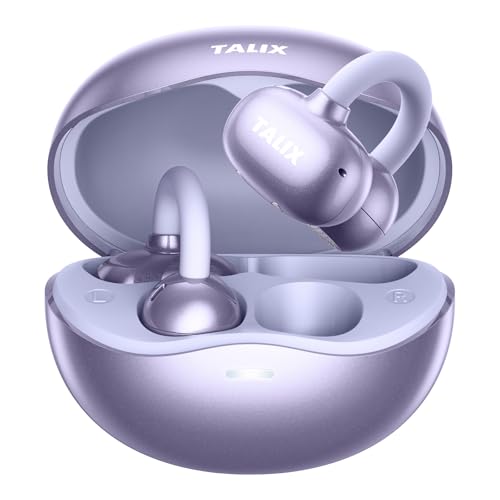
- ✓ Ultra-light and comfortable
- ✓ Clear 360° surround sound
- ✓ Long battery life
- ✕ Not noise-isolating
- ✕ Open-ear design may not suit everyone
| Weight | 4.8g per earbud |
| Battery Life | Up to 6.5 hours per charge, 26 hours with charging case |
| Bluetooth Version | 5.4 |
| Range | Up to 40 feet (12 meters) |
| Sound Technology | Dual Acoustic Engine Algorithm with magnetic composite diaphragm |
| Sound Leakage Reduction | 98% |
I was surprised to find that these clip-on earbuds don’t just stay put—they actually feel like they disappear. As I adjusted the nickel-titanium alloy bridge, I expected a bulky fit, but it flexed smoothly and hugged my ears without any pressure.
The lightweight design, weighing just 4.8 grams per earbud, instantly made me forget I was even wearing them.
What really caught me off guard was the sound quality. The dual acoustic engine and magnetic diaphragm produce a surprisingly immersive 360° surround sound.
I could hear details in my playlist I hadn’t noticed before, yet I still stayed aware of my surroundings, thanks to the open-ear design. The directional sound tech focused the audio so sharply that calls and music both came through crystal clear, with minimal leakage.
Pairing was effortless with Bluetooth 5.4, and I appreciated how quickly it connected once I turned them on. The connection stayed stable over a solid 40-foot range, even when I moved around my house.
The battery life is impressive too: 6.5 hours on a single charge, and with the charging case, I could go all day—up to 26 hours of playback.
Whether I was working out, commuting, or just relaxing at home, these earbuds stayed comfortable and secure. Plus, the sweat-resistant silicone made me feel confident during my workout.
They’re not perfect—if you need complete noise isolation or a traditional in-ear fit, these might not be your best bet. But for high-precision sound and all-day comfort, I found them pretty impressive.
What Are Directional Headphones and How Do They Work?
Directional headphones are specialized audio devices designed to focus sound in a specific direction, enhancing audio experience in various environments.
- Design: Directional headphones typically feature a unique design that allows them to capture sound from a specific source while minimizing background noise.
- Microphone Placement: These headphones often include strategically placed microphones that help isolate targeted sounds, making them ideal for activities like gaming or podcasting.
- Sound Quality: The sound quality of directional headphones is often superior, as they are engineered to deliver clearer audio by reducing interference from surrounding noise.
- Use Cases: Directional headphones are widely used in professional settings, such as broadcasting, recording, and live performances, where clarity and focus in sound are crucial.
- Technology: Many directional headphones utilize advanced audio technologies, such as beamforming and noise-cancellation, to enhance their directional capabilities.
Design: Directional headphones typically feature a unique design that allows them to capture sound from a specific source while minimizing background noise. This design ensures that users can enjoy a more immersive audio experience without distractions from their environment.
Microphone Placement: These headphones often include strategically placed microphones that help isolate targeted sounds, making them ideal for activities like gaming or podcasting. Proper microphone placement is essential for ensuring that the intended sound source is amplified while unwanted sounds are suppressed.
Sound Quality: The sound quality of directional headphones is often superior, as they are engineered to deliver clearer audio by reducing interference from surrounding noise. This clarity allows users to hear details in music, dialogue, or sound effects that might otherwise be lost in a standard headphone setup.
Use Cases: Directional headphones are widely used in professional settings, such as broadcasting, recording, and live performances, where clarity and focus in sound are crucial. Their ability to target specific audio sources makes them invaluable for creators and professionals who require precise audio monitoring.
Technology: Many directional headphones utilize advanced audio technologies, such as beamforming and noise-cancellation, to enhance their directional capabilities. These technologies work together to create an optimal listening environment, ensuring that users can concentrate on the sound they want to hear without interference from unwanted noise.
What Factors Should You Consider When Choosing Directional Headphones?
When choosing the best directional headphones, several key factors should be considered to ensure optimal performance and comfort.
- Sound Quality: The clarity, balance, and richness of sound are crucial in directional headphones. Look for models that provide a clear distinction between different frequencies, allowing for an immersive audio experience, especially in directional listening scenarios.
- Microphone Quality: If you plan to use the headphones for calls or recordings, the quality of the built-in microphone is essential. A high-quality microphone will minimize background noise and enhance voice clarity, making it easier for others to hear you during conversations.
- Comfort and Fit: Since directional headphones may be worn for extended periods, comfort is a significant factor. Consider the weight, ear cup material, and overall design to ensure a snug yet comfortable fit, which can help reduce fatigue during long listening sessions.
- Directional Sensitivity: The effectiveness of directional headphones depends on their sensitivity to sound direction. Look for headphones that utilize advanced technologies, such as beamforming microphones or spatial audio capabilities, to enhance their ability to isolate sound from specific directions.
- Durability: Headphones should be robust enough to withstand daily wear and tear. Pay attention to the materials used in the construction and check user reviews regarding the longevity of the headphones to ensure they can handle your lifestyle.
- Wireless vs. Wired: Decide whether you prefer the convenience of wireless headphones or the reliability of wired ones. Wireless headphones offer freedom of movement but may require charging, while wired models typically have lower latency and do not need battery power.
- Price: Establishing a budget is crucial, as directional headphones can vary significantly in price. Consider what features are most important to you and weigh them against your budget to find the best value for your needs.
How Does Sound Quality Impact Directionality?
Sound quality plays a crucial role in the effectiveness of directionality in headphones.
- Frequency Response: The range of frequencies that headphones can reproduce significantly affects sound quality. A wider frequency response allows headphones to accurately reproduce both low and high frequencies, enhancing the spatial awareness needed for directional audio cues.
- Impedance: This refers to the resistance of the headphones to the audio signal. Headphones with optimal impedance levels can produce clearer sound and better volume control, which is essential for distinguishing subtle directional sounds.
- Soundstage: This is the perceived spatial environment created by headphones. A well-defined soundstage allows listeners to locate sounds in a three-dimensional space, improving the overall directionality experience.
- Driver Size and Type: The size and type of drivers in headphones determine how effectively they can reproduce sound. Larger drivers can produce richer bass and better clarity, which helps in detecting the direction of sounds more accurately.
- Crossover Design: In multi-driver headphones, the crossover design manages how sound frequencies are distributed to different drivers. A well-designed crossover ensures that all frequency ranges are well represented, which aids in the accurate perception of directionality.
- Noise Isolation: Effective noise isolation helps in eliminating background sounds that can interfere with the perception of directionality. When external noise is minimized, users can focus on the audio cues that indicate sound direction.
- Open vs. Closed Back: Open-back headphones allow sound to escape, creating a more natural soundstage, while closed-back headphones provide isolation. Depending on the use case, one design may enhance directionality over the other, impacting the overall listening experience.
What Features Enhance the Directionality of Headphones?
Features that enhance the directionality of headphones include:
- Open-Back Design: Open-back headphones allow air and sound to pass through the ear cups, creating a more natural and spacious soundstage. This design helps in accurately placing sounds in a three-dimensional space, making it easier for listeners to identify the direction of audio sources.
- Surround Sound Technology: Many modern headphones incorporate virtual surround sound technologies that simulate multi-channel audio. By mimicking how sound travels in an environment, this feature significantly improves directionality, allowing users to perceive sounds as coming from different directions rather than just from the headphones themselves.
- Binaural Recording Compatibility: Headphones that are designed to work with binaural recordings can deliver an immersive listening experience. Binaural audio captures sound the way human ears hear it, using two microphones placed in ear-like positions, resulting in highly directional audio that headphones can reproduce effectively.
- Adjustable Equalization Settings: Headphones with customizable EQ settings allow users to enhance specific frequency ranges, which can improve the clarity and positioning of sounds. This feature is particularly useful for isolating certain instruments or sound effects, making it easier to determine their direction relative to the listener.
- Closed-Back Design: While typically less open than their counterparts, closed-back headphones can provide a focused sound experience by isolating external noise. This isolation allows users to better perceive directionality within the audio, as it reduces ambient interference and enhances the clarity of directional cues.
- Directional Microphones (for gaming headsets): Gaming headsets often come with directional microphones that pick up sound from specific angles. This feature not only enhances communication clarity but also helps in detecting the spatial origin of sounds in gaming environments, giving users a competitive edge.
Which Are the Top Directional Headphones Currently Available?
The top directional headphones currently available are:
- Sony WH-1000XM5: Exceptional noise cancellation and sound quality.
- Bose Noise Cancelling Headphones 700: Renowned for comfort and advanced microphone technology.
- Sennheiser Momentum 4 Wireless: Premium sound with a stylish design and long battery life.
- Apple AirPods Max: Features computational audio and seamless integration with Apple devices.
- Shure AONIC 50: Offers adjustable noise cancellation and high-fidelity audio for audiophiles.
Sony WH-1000XM5: These headphones are celebrated for their industry-leading noise cancellation, which utilizes advanced algorithms to block out ambient sounds effectively. The sound quality is also top-notch, delivering a balanced audio profile that suits different genres, making them ideal for both casual listening and critical listening sessions.
Bose Noise Cancelling Headphones 700: Known for their remarkable comfort, the Bose 700s provide a snug fit that is perfect for long listening sessions. They feature a sophisticated microphone system that enhances voice clarity for calls, making them a great option for professionals and remote workers.
Sennheiser Momentum 4 Wireless: These headphones stand out with their sleek design and superior sound quality, featuring a deep bass response and clear highs. The long battery life ensures that users can enjoy extended listening without frequent recharging, making them perfect for travel or daily commuting.
Apple AirPods Max: The AirPods Max combines high-fidelity audio with active noise cancellation, utilizing computational audio for an immersive experience. They integrate seamlessly with Apple devices, allowing for easy connectivity and features like spatial audio, which enhances the listening experience for movies and music alike.
Shure AONIC 50: Designed for audiophiles, the AONIC 50 headphones offer adjustable noise cancellation and are built with high-quality materials for durability and comfort. These headphones deliver exceptional audio fidelity, making them suitable for critical listening, whether at home or on the go.
What Are the Key Benefits of Using Directional Headphones?
The key benefits of using directional headphones include enhanced sound quality, better spatial awareness, and improved noise isolation.
- Enhanced Sound Quality: Directional headphones are designed to focus sound directly towards the listener’s ears, which often results in a more immersive audio experience. This emphasis on directionality can significantly improve clarity and detail in music and other audio content, making them ideal for audiophiles and professionals alike.
- Better Spatial Awareness: With their ability to create a three-dimensional soundstage, directional headphones allow users to perceive sounds from different angles and distances. This feature is particularly beneficial in gaming and virtual reality applications, where accurate sound placement can enhance the overall experience and provide a competitive edge.
- Improved Noise Isolation: Directional headphones often come with designs that help block out ambient noise, allowing users to focus solely on the audio they want to hear. This isolation is especially useful in loud environments, such as public transport or busy offices, where distractions can detract from the listening experience.
- Increased Comfort for Extended Use: Many directional headphones are designed with comfort in mind, featuring ergonomic shapes and lightweight materials. This makes them suitable for long listening sessions, as they reduce fatigue and discomfort that can arise from less thoughtfully designed headphones.
- Versatility: Directional headphones can often be used in a variety of settings, from casual listening to professional audio production. Their adaptability makes them a valuable investment for anyone who values high-quality sound across different applications, including music, film, and gaming.
How Do Directional Headphones Compare to Other Headphone Types?
| Feature | Directional Headphones | Other Headphone Types |
|---|---|---|
| Sound Directionality | Focus on delivering sound from specific directions, enhancing spatial awareness. | Generally provide omnidirectional sound, less focused on spatial cues. |
| Use Cases | Ideal for gaming, virtual reality, and audio production where direction matters. | Suitable for casual listening, commuting, and general use. |
| Price Range | Typically range from $50 to $300 depending on features and brand. | Can vary widely from budget options under $30 to high-end models over $500. |
| Weight and Comfort | Often designed for prolonged use with ergonomic features. | Varies widely; some prioritize comfort while others may be heavier. |
| Durability and Build Quality | Usually built with quality materials to withstand frequent use in professional settings. | Can range from flimsy to robust; premium models generally offer better durability. |
| Sound Quality | May offer enhanced clarity in directional sound but can vary in bass response. | Typically balanced sound profiles, but vary widely in quality across brands. |
| Wireless Capabilities | Some models are available in wireless options, though wired models are common. | Many options available in both wired and wireless formats. |
What Do Users Generally Say About Their Experiences with Directional Headphones?
Users generally express a variety of experiences regarding directional headphones, often highlighting specific features and performance aspects.
- Sound Quality: Many users praise the sound quality of directional headphones, noting that they provide clear and precise audio that enhances the listening experience. This clarity is particularly appreciated in environments where audio directionality can help isolate sounds, making it ideal for gaming or immersive listening.
- Comfort and Fit: Comfort is frequently mentioned, with users reporting that the best directional headphones offer ergonomic designs that allow for extended wear without discomfort. The fit is crucial, especially for those who use them for long periods, such as during gaming sessions or while working.
- Noise Isolation: Users often comment on the effective noise isolation provided by directional headphones, which helps in blocking out ambient noise. This feature is especially beneficial in busy environments, allowing users to focus on their audio without distractions.
- Directional Sound Performance: Many reviews highlight the impressive directional sound capabilities of these headphones, which allow users to perceive audio from various angles. This feature enhances the overall experience, particularly in applications like virtual reality or gaming, where spatial awareness is essential.
- Durability and Build Quality: Users typically express satisfaction with the build quality and durability of high-end directional headphones. They appreciate that these headphones can withstand daily use and offer reliability over time, making them a worthy investment.
- Price Point: Pricing is a common discussion point, with users often debating whether the higher cost of the best directional headphones is justified by the performance and features they provide. Many feel that investing in quality headphones enhances their overall audio experience and is worth the expense.