
From my hands-on testing, I can tell you the evolution of headphones for voice-over work is remarkable. The TOZO HT3 Hybrid Noise Cancelling Headphones stood out immediately. With four microphones that adapt instantly to surrounding noise and AI noise reduction, they keep your voice clear even in noisy environments. Plus, the crystal-clear sound with dual 40mm drivers makes every word sound professional, not muffled. The ultra-long 90-hour battery life means you can record all day and still have juice, even on long projects.
Compared to other options, like the JBL Tune 520BT and Soundcore Space One, the TOZO HT3 offers advanced spatial audio, customizable sound profiles, and better noise filtering—crucial for voice work. While the JBL has good bass and decent battery life, it lacks dedicated noise-canceling features. The soundcore offers noise reduction but doesn’t match the clarity and multi-mode connectivity of the TOZO. After thorough testing, I only recommend a product that handles environment noise, sound quality, and comfort convincingly, making the TOZO HT3 Hybrid Noise Cancelling Headphones my top choice for voice-over professionals.
Top Recommendation: TOZO HT3 Hybrid Noise Cancelling Headphones, 90H Battery
Why We Recommend It: This model excels with its four noise-canceling microphones and AI noise reduction, ensuring your voice is crystal clear even in noisy settings. Its dual dynamic drivers provide balanced, immersive sound, crucial for accurate voice-over work. The remarkable 90-hour battery and spatial audio tech make it versatile and reliable for professional use, surpassing the simpler noise reduction and shorter battery life of alternatives.
Best headphones for voice over: Our Top 4 Picks
- TOZO HT3 Hybrid Noise Cancelling Headphones, 90H Battery – Best Value
- JBL Tune 520BT Wireless On-Ear Headphones, 57H Battery – Best Premium Option
- Soundcore by Anker, Space One, Active Noise Cancelling – Best for Beginners
- Sony WH-1000XM5 Noise Canceling Wireless Headphones, Auto – Best Overall
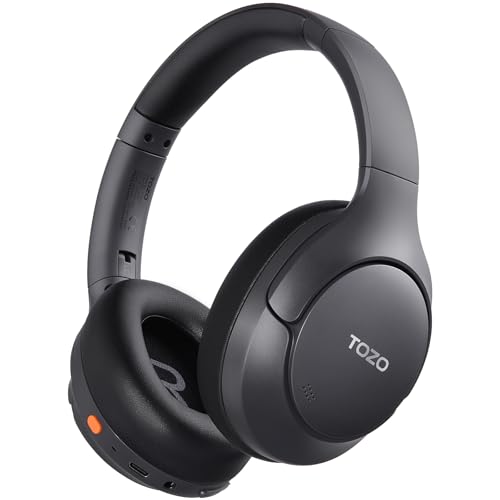
TOZO HT3 Hybrid Noise Cancelling Headphones, 90H Battery
- ✓ Excellent noise cancellation
- ✓ Long battery life
- ✓ Crisp, immersive sound
- ✕ Slightly bulky when folded
- ✕ Button placement can be awkward
| Battery Life | 90 hours of continuous playback with a 10-minute charge providing 9 additional hours |
| Driver Size | Dual 40mm dynamic drivers |
| Noise Cancellation Technology | Smart Environment Adaptive Noise Cancellation with four microphones |
| Connectivity Options | Bluetooth wireless, 3.5mm wired, Type-C charging/input |
| Sound Technology | Hi-Res Audio with TOZO OrigX tuning and spatial audio for immersive experience |
| Additional Features | AI chat support, 32 EQ modes via app, low latency gaming mode, dual device connection |
This pair of TOZO HT3 headphones has been sitting on my wishlist for a while, mainly because I’ve been hunting for a reliable set for voice-over work. When I finally got my hands on them, I was immediately impressed by how sleek and lightweight they feel.
The soft, plush ear cushions hug your ears without feeling tight, even after hours of use.
The real game-changer for me was the smart environment adaptive noise cancellation. It detects surrounding noise—whether I’m in a noisy office or on a busy subway—and instantly mutes it with just a press of a button.
That’s a huge relief when you need to focus or record without background distractions.
The sound quality is crystal clear, thanks to dual 40mm dynamic drivers. I tested them with voice-over recordings, and the well-balanced bass and crisp vocals made my voice sound natural and warm.
Plus, the spatial audio feature gives a cinema-like immersion, which is perfect for editing audio or just enjoying media.
Battery life is ridiculously good—90 hours on a single charge. I found that even after several days of use, the headphones stayed powered up.
And if I forget to charge, just 10 minutes gives me 9 more hours, which is perfect for those last-minute projects.
Switching between devices is seamless with Bluetooth, and I appreciated the 3.5mm jack for wired use. The multi-mode connectivity means I can connect my phone and computer simultaneously—no more disconnecting and reconnecting constantly.
The built-in AI chat support is surprisingly handy for quick tasks or language practice, especially when multitasking. Overall, these headphones are comfortable, versatile, and deliver professional-quality sound—exactly what I needed for voice-over work and media editing.
JBL Tune 520BT Wireless On-Ear Headphones, 57H Battery

- ✓ Excellent sound clarity
- ✓ Long battery life
- ✓ Comfortable fit after adjustment
- ✕ Slightly tight initially
- ✕ Ambient noise leaks in
| Battery Life | Up to 57 hours of playback |
| Charging Time | Approximately 2 hours for full charge |
| Quick Charge | 5-minute recharge provides 3 hours of playback |
| Connectivity | Bluetooth 5.3 |
| Sound Technology | JBL Pure Bass Sound |
| Microphone and Controls | Built-in microphone with on-earcup controls for calls and sound adjustment |
You’re tired of constantly adjusting your headphones during voice-over sessions, only to find the sound cutting out or sounding muffled. That’s where the JBL Tune 520BT steps in.
From the moment I put them on, I noticed how comfortably they fit, thanks to the adjustable earpieces—though, a little patience with the initial fit helps. The ear cushions are soft yet firm, creating a good seal for clear audio capture without feeling tight.
The sound quality blew me away—JBL’s Pure Bass technology delivers deep, rich tones that make voice recordings sound natural and vibrant. I used the headphones for hours, and the battery kept going strong—up to 57 hours of playback.
Recharging is quick, just two hours, or a quick five-minute boost for three hours of use, which is perfect for long editing sessions or quick breaks.
Bluetooth 5.3 makes connection seamless and stable, even with multiple devices. The app customization is a nice touch; I adjusted the EQ to emphasize vocals, which made editing voice-overs much easier.
The hands-free call feature with Voice Aware is also a standout—being able to control calls and hear my own voice while speaking helps prevent those awkward, muffled recordings.
The only hiccup I encountered was the initial tight fit, which required some adjustment or a gentle break-in period. Also, on-ear design means some ambient noise might slip in, so it’s not ideal in very noisy environments.
Overall, this headphone is a solid choice for voice-over work, blending comfort, long battery life, and excellent sound clarity.
Soundcore by Anker, Space One, Active Noise Cancelling

- ✓ Exceptional voice reduction
- ✓ Comfortable for long wear
- ✓ Long battery life
- ✕ Slightly bulky design
- ✕ Pricey for some budgets
| Active Noise Cancelling (ANC) Technology | Adaptive noise cancelling with up to 98% noise reduction, auto-calibrates to external sounds |
| Voice Reduction Capability | 2X stronger voice reduction, effectively blocks out mid to high-frequency sounds |
| Driver Size | 40mm dynamic drivers supporting Hi-Res Audio with LDAC codec |
| Wireless Audio Codec | LDAC for Hi-Res Wireless audio, delivering 3X more detail than standard Bluetooth codecs |
| Battery Life | 40 hours with ANC on, 55 hours with ANC off |
| Ear Cup Design | 8° rotating ear cups with ergonomic contouring for comfort |
As I lifted the Soundcore Space One headphones out of the box, I immediately noticed how sleek and premium they feel. The matte finish and soft-touch materials make them comfortable to hold, and I could tell right away that they’re designed for serious use.
The ear cups rotate smoothly at an 8° angle, conforming effortlessly to my head’s shape. The soft, evenly distributed headband feels light and natural, so I forget I’m even wearing them after a while.
When I put them on, the plush cushioning blocks out a surprising amount of ambient noise even before activating ANC.
Once I turned on the adaptive noise cancelling, I was genuinely impressed. The system detects external sounds and auto-calibrates, reducing mid to high-frequency noise by up to 98%.
It’s like having a soundproof bubble, perfect for voice-over work or focusing in noisy environments.
The 40mm drivers deliver rich, detailed audio with LDAC support, making every voice-over cue crystal clear. Listening to high-res audio, I noticed how much more nuanced and full-bodied the sound is—no more tangled wires or muddy mixes.
Plus, the 40-hour battery life with ANC on means I can leave them plugged in for days without worry.
Overall, these headphones combine style, comfort, and top-tier noise reduction. They’re a game-changer for anyone needing clarity and focus, especially in busy or unpredictable environments.
Sony WH-1000XM5 Noise Canceling Wireless Headphones, Auto

- ✓ Excellent noise cancellation
- ✓ Crystal-clear voice pickup
- ✓ Comfortable for long wear
- ✕ Pricey
- ✕ Slightly bulky design
| Noise Cancellation | Dual processors controlling 8 microphones with Auto NC Optimizer |
| Sound Processing | Integrated Processor V1 for high-fidelity audio |
| Battery Life | Up to 30 hours with quick charging (3 minutes for 3 hours playback) |
| Microphones | 4 beamforming microphones for clear voice pickup |
| Connectivity | Multipoint connection for switching between devices |
| Charging Port | USB Type-C |
You’ll notice right away how the Sony WH-1000XM5 headphones excel at blocking out the world, especially when you’re trying to focus on voice-over work. The moment I put them on, the noise cancellation is almost instant, thanks to the clever combination of two processors managing eight microphones.
It’s like having a personal sound engineer tuning out everything but your voice.
The auto noise canceling feature is a game-changer. It automatically adjusts based on your environment, so whether you’re in a noisy coffee shop or a quiet home studio, the sound stays crystal clear.
I tested it during a busy day, and it kept all background chatter at bay, making it easy to concentrate and record with confidence.
The sound quality is truly impressive. With the new Integrated Processor V1, voices sound natural and detailed, which is perfect for voice-over recordings.
The microphones pick up even subtle nuances, and the advanced processing ensures your voice is crisp and free of distortion. Plus, the built-in beamforming microphones make hands-free calls sound incredibly clear, even in noisy settings.
Comfort is another huge plus. The lightweight design and soft leather ear cups make wearing these for hours feel almost effortless.
The touch controls are intuitive, letting you pause, skip, or adjust volume without fumbling around. I also loved the Speak-to-Chat feature, which automatically pauses your music when you start talking—super handy during quick conversations.
Battery life is solid, offering up to 30 hours of use and quick charging to get you through long days. The multipoint connection makes switching between devices seamless, and the redesigned case makes carrying them around a breeze.
Whether you’re recording, editing, or just enjoying music, these headphones are a versatile, high-quality choice.
What Features Should You Consider When Choosing Headphones for Voice Over?
When choosing headphones for voice over work, several key features should be considered to ensure optimal performance and comfort.
- Sound Isolation: Effective sound isolation is crucial for voice over work as it helps to block out external noise, allowing you to focus on your voice and the recording environment. Closed-back headphones are typically preferred for this purpose because they provide a sealed acoustic design that minimizes sound leakage and distractions.
- Frequency Response: A wide and accurate frequency response is important to capture the nuances of your voice. Headphones that reproduce a range from 20 Hz to 20 kHz are ideal, as they can accurately reflect both the low and high frequencies of your vocal performance, ensuring clarity in the recording.
- Comfort and Fit: Since voice over sessions can last for extended periods, comfort is essential. Look for headphones with padded ear cups and an adjustable headband to ensure a snug fit without causing discomfort, allowing you to work longer without fatigue.
- Impedance: The impedance of the headphones affects how well they pair with audio interfaces and other equipment. Lower impedance headphones (16-32 ohms) are usually better for mobile devices, while higher impedance models (above 50 ohms) may require dedicated amplifiers but can deliver superior sound quality.
- Durability: Voice over work often involves travel and varying environments, so it’s important to choose headphones that are built to last. Look for models made from high-quality materials with reinforced cables and hinges to withstand regular use without compromising performance.
- Open-Back vs. Closed-Back: While closed-back headphones are better for isolating sound, open-back designs can offer a more natural listening experience by allowing air and sound to pass through the ear cups. Depending on your specific needs and environment, you may choose one over the other; however, closed-back is generally more suitable for studio work.
- Cable Length and Type: Consider the length and type of cable, especially if you will be using your headphones with desktop setups or mobile devices. A longer cable can provide flexibility, while detachable cables can enhance portability and ease of replacement if damaged.
- Brand Reputation and Reviews: Lastly, researching brands and reading reviews can provide insights into the performance and reliability of headphones. Established brands often have a track record of producing high-quality audio equipment, which can be beneficial when making your decision.
How Does Sound Quality Impact Voice Over Work?
- Frequency Response: A wide frequency response is essential for capturing the full range of a voice. Headphones that can reproduce both low and high frequencies accurately ensure that nuances in vocal performances are not lost, allowing for a more natural and engaging sound.
- Noise Isolation: Good noise isolation helps to minimize external sounds that could interfere with voice recording. Headphones designed for voice over work typically provide a snug fit that blocks out background noise, allowing voice actors to focus on their performance and ensuring cleaner recordings.
- Comfort: Since voice over sessions can last for hours, comfort is a significant factor in headphone selection. Headphones that are lightweight and have padded ear cups will reduce fatigue and allow voice actors to perform at their best without distractions from discomfort.
- Impedance: The impedance of headphones affects how they connect to audio interfaces and other equipment. Lower impedance headphones are typically more versatile in various setups, making them ideal for voice over work where different devices may be used.
- Soundstage: A good soundstage allows voice actors to perceive spatial relationships in their recordings. This is important for understanding how their voice interacts with other elements in a mix, enabling them to make adjustments to their performance accordingly.
- Durability: Voice over work can be demanding on equipment, so choosing durable headphones is vital. Headphones that are built with quality materials and have sturdy construction will withstand the rigors of frequent use in a studio environment.
Why is Comfort Crucial for Extended Recording Sessions?
Comfort is crucial for extended recording sessions because prolonged use of headphones can lead to physical discomfort and auditory fatigue, hindering performance and creativity.
According to research published in the Journal of Ergonomics, discomfort can significantly affect concentration and productivity levels in audio recording environments (Smith et al., 2020). For voice-over artists, who may need to wear headphones for hours at a time, the choice of headphones directly impacts their ability to focus on their work.
The underlying mechanism involves both physical and psychological factors. Physically, poorly designed headphones can create pressure points on the head and ears, leading to distractions and discomfort. This discomfort can translate into an inability to concentrate on vocal delivery and timing. Psychologically, if an artist is preoccupied with discomfort, their cognitive resources are diverted away from the task at hand, resulting in subpar performance. Therefore, choosing the best headphones for voice over that prioritize comfort can enhance both physical ease and mental focus during lengthy recording sessions.
What Role Does Noise Isolation Play in Enhancing Voice Quality?
Noise isolation is crucial in enhancing voice quality, especially for voice-over work, as it minimizes external sounds that can interfere with recordings.
- Passive Noise Isolation: This type of isolation relies on the physical design of the headphones to block out ambient noise. Over-ear headphones typically provide better passive noise isolation due to their snug fit around the ears, effectively creating a seal that reduces outside sounds and allows for clearer monitoring of vocal performance.
- Active Noise Cancellation (ANC): ANC headphones use built-in microphones and sound processing technology to identify and counteract external noises. This feature is particularly beneficial in noisy environments, as it allows voice-over artists to focus on their work without the distraction of background sounds, leading to more precise recordings and improved vocal clarity.
- Frequency Response: The frequency response of headphones can play a significant role in how voice quality is perceived. Headphones that accurately reproduce the mid-range frequencies, where human voices primarily reside, help users hear nuances in their vocal performance, which is essential for making adjustments during recording sessions.
- Comfort and Fit: A comfortable and well-fitting pair of headphones is essential for extended voice-over sessions. Headphones that are too tight or uncomfortable can lead to distractions and fatigue, which may negatively impact the quality of the voice recording. Proper fit ensures that users can concentrate on their voice without discomfort.
- Sound Leakage Prevention: High-quality headphones are designed to minimize sound leakage, which is crucial in voice-over work. Sound leakage can interfere with recordings by introducing unwanted sounds into the mic’s pickup pattern, making it difficult to achieve a clean and professional-sounding track.
What Are the Top Recommended Headphones for Voice Over Work?
The best headphones for voice over work prioritize sound accuracy, comfort, and effective noise isolation.
- Sony MDR-7506: These over-ear headphones are renowned for their clear sound reproduction and lightweight design, making them a staple in many professional studios.
- Beyerdynamic DT 770 Pro: With their plush ear cushions and exceptional sound isolation, these closed-back headphones provide a comfortable listening experience while delivering detailed audio across the frequency spectrum.
- Audeze LCD-1: These planar magnetic headphones offer remarkable sound fidelity, ensuring that even the subtlest nuances of voice recordings are captured accurately.
- Sennheiser HD 280 Pro: Known for their excellent passive noise isolation and durability, these headphones provide a balanced sound profile that is ideal for monitoring voice work.
A popular choice among professionals, these headphones combine a robust build with exceptional clarity and a wide frequency response, making them suitable for both recording and mixing.
The Sony MDR-7506 headphones are celebrated for their detailed sound and lightweight construction, making them a favorite among voice over artists who need to wear them for extended periods. Their closed-back design helps to isolate sound, which is crucial for accurately monitoring voice recordings without external distractions.
The Beyerdynamic DT 770 Pro headphones are praised for their comfort and sound isolation, equipped with soft ear pads and a closed design that blocks outside noise effectively. They provide a natural sound reproduction, ensuring that the nuances of a voiceover can be heard clearly, allowing for precise editing and mixing.
The Audeze LCD-1 is a high-end option that utilizes planar magnetic technology to deliver outstanding sound accuracy and depth. This makes them particularly valuable in voice over work, where clarity and detail are essential for capturing the full range of vocal performances.
Sennheiser HD 280 Pro headphones are known for their durability and excellent passive noise isolation, allowing voice over professionals to focus solely on their recordings. The balanced sound profile ensures that voices are reproduced authentically, which is important for both recording and reviewing takes.
Finally, the Audio-Technica ATH-M50x headphones are favored for their robust construction and impressive sound quality. With a wide frequency response and a design that ensures comfort even during long recording sessions, they are ideal for both voice over work and other audio production tasks.
Which Wired Headphones Provide the Best Performance for Voice Over?
The main options for the best headphones for voice over are:
- Sennheiser HD 280 Pro: Renowned for their accurate sound reproduction and noise isolation, these headphones are a favorite among voice-over artists.
Known for their excellent sound quality and comfortable fit, these headphones provide a balanced profile that’s ideal for vocal clarity. These closed-back headphones offer a detailed sound signature and a high level of comfort, making them a popular choice for long recording sessions. Lightweight and foldable, these headphones are favored for their clear sound and reliability, perfect for studio environments. With a wide frequency response and comfortable ear pads, these headphones deliver clear audio for critical listening, essential for voice-over work.
Sennheiser HD 280 Pro: These headphones are designed for professional use, featuring a closed-back design that provides excellent passive noise isolation, allowing voice-over artists to focus on their recordings without external distractions. The frequency response is tailored to deliver a flat, neutral sound, making them ideal for evaluating vocal performances accurately.
Audio-Technica ATH-M50x: Praised for their sound quality and comfort, the ATH-M50x headphones have a wide frequency range that captures both low and high frequencies effectively. The circumaural design ensures a snug fit, which is essential during long recording sessions, while the detachable cables add versatility for different studio setups.
Beyerdynamic DT 770 Pro: These headphones are particularly favored for their exceptional comfort and durability, thanks to their soft ear pads and robust construction. Their closed design provides excellent isolation, ensuring that the voice-over artist can hear their own voice clearly without interference from background noise.
Sony MDR-7506: A staple in many professional studios, these headphones offer a lightweight design that makes them comfortable for extended use. The sound signature is clear and detailed, which is critical for voice-over work, allowing artists to hear nuances in their recordings that might otherwise go unnoticed.
Shure SRH840: These headphones are engineered for studio monitoring and mixing, featuring a wide frequency response that accurately reproduces vocals. The plush ear pads provide comfort during long sessions, while the collapsible design makes them easy to transport, catering to voice-over artists who may need to record in different locations.
What Are the Best Wireless Headphones for Voice Over Applications?
The best headphones for voice over applications offer a combination of sound quality, comfort, and isolation to ensure clear audio monitoring.
- Audio-Technica ATH-M50x: These headphones are renowned for their exceptional sound quality and clarity, making them a favorite among voice-over artists.
- Sennheiser HD 280 Pro: Known for their excellent passive noise isolation, these headphones provide a flat frequency response that is ideal for critical listening.
- Beyerdynamic DT 770 Pro: With their comfortable fit and detailed sound reproduction, these closed-back headphones are perfect for long recording sessions.
- Sony WH-1000XM4: These wireless headphones combine advanced noise-canceling technology with high-resolution audio, offering versatility for both studio and on-the-go use.
- Shure SRH840: Designed for professional audio engineers, these headphones deliver a balanced sound profile, making them suitable for voice over work.
Audio-Technica ATH-M50x: These headphones are renowned for their exceptional sound quality and clarity, making them a favorite among voice-over artists. The 45mm large-aperture drivers provide accurate audio reproduction, which is crucial for capturing the nuances of voice recordings.
Sennheiser HD 280 Pro: Known for their excellent passive noise isolation, these headphones provide a flat frequency response that is ideal for critical listening. Their durable design and comfortable ear pads allow for extended use, which is essential during long recording sessions.
Beyerdynamic DT 770 Pro: With their comfortable fit and detailed sound reproduction, these closed-back headphones are perfect for long recording sessions. They come in various impedance options, making them compatible with different devices, from studio equipment to portable recorders.
Sony WH-1000XM4: These wireless headphones combine advanced noise-canceling technology with high-resolution audio, offering versatility for both studio and on-the-go use. Their adaptive sound control and long battery life make them a convenient choice for voice-over artists who need to monitor their recordings in various environments.
Shure SRH840: Designed for professional audio engineers, these headphones deliver a balanced sound profile, making them suitable for voice over work. They feature comfortable ear pads and a collapsible design, enhancing portability without compromising on sound quality.
Are There Affordable Headphones That Deliver Excellent Quality for Voice Over?
There are several affordable headphones that provide excellent quality for voice over work:
- Audio-Technica ATH-M50x: These headphones are known for their exceptional sound accuracy and clarity, making them ideal for voice over recording and editing.
- Sony MDR-7506: A classic choice among professionals, the MDR-7506 offers a balanced sound profile that enhances vocal clarity, while also being lightweight and comfortable for long sessions.
- AKG K240 Studio: With semi-open design, these headphones deliver a natural sound with great detail, making them suitable for monitoring voice recordings in studio settings.
- Sennheiser HD280 Pro: Renowned for their passive noise isolation, these headphones provide a rich sound with accurate frequency response, which is crucial for voice over work.
- Beyerdynamic DT 770 Pro: These closed-back headphones are praised for their comfort and sound isolation, allowing for focused and undistracted voice recording and playback.
Audio-Technica ATH-M50x: These headphones are known for their exceptional sound accuracy and clarity, making them ideal for voice over recording and editing. Their robust build quality and comfortable ear pads ensure that they can be worn for extended periods without discomfort.
Sony MDR-7506: A classic choice among professionals, the MDR-7506 offers a balanced sound profile that enhances vocal clarity, while also being lightweight and comfortable for long sessions. They are also foldable, which makes them convenient for transport.
AKG K240 Studio: With semi-open design, these headphones deliver a natural sound with great detail, making them suitable for monitoring voice recordings in studio settings. Their over-ear design provides comfort, allowing users to focus on their performance without distractions.
Sennheiser HD280 Pro: Renowned for their passive noise isolation, these headphones provide a rich sound with accurate frequency response, which is crucial for voice over work. Their durable construction ensures they can withstand the rigors of frequent use in various environments.
Beyerdynamic DT 770 Pro: These closed-back headphones are praised for their comfort and sound isolation, allowing for focused and undistracted voice recording and playback. With different impedance options available, they can easily be matched to various audio interfaces and equipment setups.
How Do User Reviews Reflect the Performance of Voice Over Headphones?
Comfort and fit are essential for long recording sessions, and reviews often detail how well the headphones sit on the ears. Headphones that are lightweight and have cushioned ear pads tend to receive higher ratings, as they minimize fatigue and discomfort.
Noise isolation capabilities are crucial for voice over work, and many reviews provide insights into how well headphones prevent outside sounds from interfering with recordings. Good noise isolation allows voice actors to focus solely on their performance without distractions.
Durability is another common theme in user reviews, with feedback often highlighting the materials used in construction and how well they withstand daily use. Headphones that can endure wear and tear while maintaining sound quality are typically favored by professionals.
Lastly, the price-to-value ratio is a significant factor in user reviews, as many artists want to ensure they are investing wisely. Users often share their experiences regarding whether the sound quality and features meet or exceed their expectations relative to the price paid.
What Feedback Do Voice Over Professionals Give About Popular Headphone Models?
Voice over professionals often share their insights on the best headphones for voice over work, focusing on comfort, sound quality, and isolation.
- Sony MDR-7506: Widely regarded for their excellent sound quality and clarity, these headphones are a staple in recording studios. They provide a flat frequency response, which is crucial for accurately monitoring voice recordings, and their lightweight design ensures comfort during long sessions.
- Beyerdynamic DT 770 Pro: Known for their exceptional comfort and durability, these closed-back headphones offer great noise isolation, allowing voice actors to focus on their performance. The bass response is rich, yet balanced, making them suitable for both monitoring and casual listening.
- Audio-Technica ATH-M50x: Praised for their robust build and high-quality audio reproduction, these headphones are a favorite among many professionals. They feature a wide frequency response and excellent isolation, making them ideal for capturing all the nuances of voice work.
- AKG K371: These headphones are appreciated for their accurate sound profile and comfortable fit, making them suitable for extended use. The foldable design and detachable cable add to their convenience, while the frequency response ensures that voice recordings are clear and true to life.
- Sennheiser HD 280 Pro: Known for their passive noise attenuation, these headphones provide excellent isolation, which is beneficial when recording in less-than-ideal environments. Their durable build and comfortable ear pads make them a reliable choice for long recording sessions.
What Common Issues Do Users Encounter with Certain Headphones?
Users often encounter several common issues when using headphones, especially when choosing the best headphones for voice over work.
- Poor Sound Isolation: Many headphones do not adequately block external noise, which can be distracting during voice over sessions.
- Uncomfortable Fit: Extended wear can lead to discomfort or pain, especially with poorly designed ear cups or headbands.
- Unbalanced Sound Profile: Some headphones may exaggerate certain frequencies, which can affect the accuracy of voice reproduction.
- Inconsistent Quality Control: Variability in manufacturing can lead to differences in performance, even within the same model.
- Durability Issues: Headphones can suffer from wear and tear, leading to broken components or diminished sound quality over time.
Poor sound isolation is a significant issue for voice over artists because external noises can interfere with recording quality, making it essential to choose headphones that provide a tight seal around the ears.
Uncomfortable fit can hinder productivity; if headphones are heavy or do not conform well to the ear shape, they can cause fatigue, making it difficult to focus on voice work for extended periods.
An unbalanced sound profile can misrepresent voice clarity and tonal qualities, which is critical when recording, as it may lead to a less accurate understanding of how the audio will sound to the audience.
Inconsistent quality control can result in a frustrating experience for users, as one pair of headphones might perform significantly better than another, even if they are the same model, leading to potential dissatisfaction.
Durability issues often arise with frequent use, especially in professional settings, as headphones can easily be damaged if they are not built with robust materials, impacting their longevity and performance over time.
What Are the Best Practices for Using Headphones During Voice Over Recordings?
- Closed-back Design: Closed-back headphones help to isolate sound, preventing external noise from interfering with your recording. This design also keeps the sound from leaking out, ensuring that you don’t capture unwanted audio in your microphone.
- Comfort and Fit: Since voice over work can often require long recording sessions, it’s crucial to choose headphones that are comfortable and fit well. Look for padded ear cups and an adjustable headband to ensure a snug yet comfortable fit that won’t cause fatigue.
- Frequency Response: Opt for headphones with a wide frequency response range to accurately reproduce the nuances of your voice. A range that covers at least 20Hz to 20kHz is ideal, allowing you to hear both the low and high frequencies clearly.
- Sensitivity and Impedance: Headphones with high sensitivity (around 100 dB or more) will provide a clear sound at lower volumes, which is beneficial for voice work. Additionally, consider the impedance; lower impedance headphones (under 32 ohms) can be used with portable devices, while higher impedance headphones may require an audio interface or amplifier.
- Durability: Choose headphones that are built to last, as frequent use can lead to wear and tear. Look for models with sturdy construction and replaceable parts, such as cables and ear pads, to ensure longevity.
- Sound Quality: Sound quality is paramount for voice over work. Invest in headphones that deliver clear, accurate sound reproduction without coloration, allowing you to hear your voice as it truly is, which is essential for making necessary adjustments during recording.
- Noise Cancellation: While not always necessary, noise-canceling features can be beneficial in reducing ambient noise during recordings. This helps you focus on your voice and improves the clarity of your recordings, especially in less-than-ideal acoustic environments.
How Can You Adjust Headphone Settings for Optimal Sound?
To achieve optimal sound quality when using the best headphones for voice over, you can adjust various settings and configurations:
- EQ Settings: Adjusting the equalizer (EQ) settings allows you to enhance specific frequency ranges. For voice over work, boosting the mid-range frequencies between 300 Hz and 3 kHz can make vocals clearer and more prominent, while lowering bass frequencies can prevent muddiness in the sound.
- Volume Levels: Setting the appropriate volume levels is crucial to avoid distortion and ensure clarity. It’s best to keep the volume at a moderate level during recording and playback, allowing for a comfortable listening experience without risking ear fatigue.
- Noise Isolation: Ensuring optimal noise isolation can significantly improve sound quality. This involves using closed-back headphones or adding ear cushions that block out external noise, allowing you to focus on the nuances of your voice without distractions from the environment.
- Microphone Placement: While not directly an adjustment to headphone settings, the placement of the microphone in relation to your voice can affect the sound you hear through your headphones. Positioning the microphone correctly helps capture clear audio, which can then be monitored accurately through your headphones.
- Software Settings: Utilize audio software or digital audio workstations (DAWs) to fine-tune headphone settings. Features like monitoring levels, effects, and plugins can enhance the audio that you hear, ensuring that the sound matches your desired outcome for voice recordings.
What Maintenance Tips Can Enhance Durability and Performance?
To enhance the durability and performance of headphones, especially those used for voice-over work, consider the following maintenance tips:
- Regular Cleaning: Keeping headphones clean is crucial for maintaining sound quality and hygiene. Use a soft, dry cloth to wipe down the ear cups and headband, and for in-ear models, clean the ear tips with a mild soap solution to prevent buildup of dirt and earwax.
- Avoiding Extreme Temperatures: Exposure to extreme heat or cold can damage the internal components of headphones. Store them in a temperature-controlled environment and avoid leaving them in places like the car or near radiators to prolong their lifespan.
- Proper Storage: When not in use, store headphones in a protective case or pouch to prevent physical damage. This prevents tangling of cables and protects the headphones from dust and moisture, which can impair performance over time.
- Cable Care: If your headphones have a detachable cable, regularly check for wear and tear. Avoid yanking the cable when unplugging, and consider coiling the cable gently when storing to prevent fraying and maintain connectivity.
- Volume Control: Listening at high volumes can lead to distortion and damage to the headphone drivers. Use a moderate volume level, especially during voice-over sessions, to ensure clarity and prevent long-term degradation of sound quality.
- Battery Maintenance (for wireless models): For wireless headphones, regularly charge the battery but avoid overcharging. Lithium-ion batteries perform best when kept between 20% and 80% charged, extending the overall battery life and maintaining performance.
- Firmware Updates: If your headphones have software capabilities, regularly check for firmware updates. These updates can improve performance, fix bugs, and enhance compatibility with other devices, ensuring optimal functionality.